
From a Single Client to a Global Mission—The Origins of reSTART
How a Shared Vision, a Home in the Woods, and a Lot of Grit Launched a Movement
This journey started many years before reSTART, when I first moved to the Seattle area. I had moved here with my family and needed to open my private practice (for the third time). It was 1994. I rented a space in South Seattle, near where I was living. One of my first clients was a young man of 25 who was depressed, whose marriage was falling apart, and who was about to be fired from his second job in the tech industry.
It turned out that he had been fired because he couldn’t stop playing a Dungeons and Dragons multi-user video game. I had no idea back then what that meant. I was ignorant about the internet, had no computer, and no notion of what his experiences were online. He became my teacher, I would say. It was through him that I began to understand addiction to video games and the Internet.
Back then there were very few clinicians who were noticing the same thing I was noticing. Over the course of the next few years, I communicated with them: Marissa Orzak, Kimberly Young, David Greenfield. It was a time when others looked at us strangely when we talked about Internet addiction. But Kimberly Young had done some initial research and presented it to the American Psychological Association in 1996, proposing the recognition of a new disorder that she called Internet Addiction Disorder.
It is 29 years later and the American Psychiatric Association still has not recognized Internet addiction, social media addiction, or gaming disorder. The problem, back in the day, was, in part, lack of research. But the other problem, as I see it, was failure to endorse the idea that behaviors can become just as addictive as ingested chemicals. Progress was made when the APA did, finally, recognize Gambling Disorder. As of now, a task force, of which Cosette and I are a part, is pulling together the evidence (of which there is now plenty) to convince the APA to give full recognition to Gaming Disorder. It would be a start.
The World Health Organization has been way ahead of us, here in the USA. So has S. Korea and China. S. Korea recognized Internet Addiction Disorder in 2002; China recognized it in 2008; the WHO recognized Gaming Disorder in 2018.
I was there in China when the diagnosis became official. I, and two other Americans, had been invited to attend the conference where the data was being considered and a vote was taken. We three presented twice, to a huge audience of medical students, and to an intimate group of clinicians. We all celebrated after the vote was taken and the diagnosis accepted.
We were given a tour of the first Internet addiction treatment facility in China. There are a few documentaries about that facility, which, to our eyes, looked like a combination of prison and military boot camp – not the approach reSTART has taken! None-the-less, I admire the Chinese for seeing and addressing the problem long before most people here in the US were even conscious of it.
I’ve jumped ahead in my story, so, will back-track a bit.
In 1999 I met a colleague, Jay Parker, who was primarily interested in helping people with compulsive sexual behaviors. We opened Internet/Computer Addiction Services. He did recovery coaching, mainly with men, while I worked with the partners of his clients and kept up my broader interest in Internet addiction. I grew increasingly envious of Jay’s ability to send his clients to specialized residential treatment if they needed it. I had nowhere to send my young adolescent or adult males who needed a higher level of care for their Internet addiction. Their histories and personalities were very different from those of Substance Use clients of similar age, and different from the much more mature men with compulsive sexual behavior, who were often married and had careers.
The country needed a residential treatment program for these young men who were coming to me, most of whom needed a safe place to detox and get intensive therapy. Fortunately, in 2009 I met Cosette Rae and her husband Gary.
Cosette was a clinical social worker who completely understood the problems of Internet addiction. What a relief for both of us. It was so rare back then to find other clinicians who really “got” the problem. She and I arrived at our knowledge by very different routes, but by the time we met, we were fellow travelers. Both of us were frustrated by the lack of understanding we experienced among our clinical colleagues and the public at large. Both of us understood the huge need for a residential program.
We liked each other and we were risk-takers.
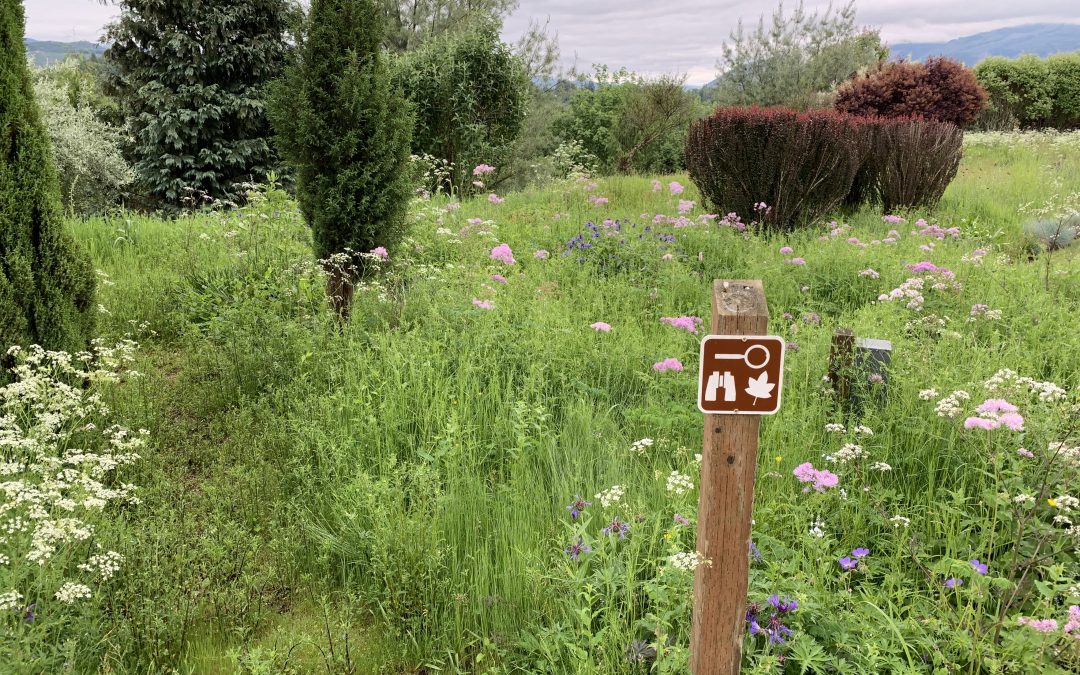
I have a keen memory of our first conversation at a coffeeshop during which we commiserated over this state-of-affairs. We said goodbye. Then, I believe it may have been that very evening or the next day Cosette called me and suggested I come look at their home. She had talked it over with Gary. Their kids were grown, the house was large, the property was like a beautiful park – maybe we could start the first program in the USA on that property.
And that’s what we did.
I remember well a drive we three took to visit a SUD program in Eastern WA. They had a client who needed the program we were developing because he just didn’t fit with the clients they were treating. On the way home we were playing around with names and I believe it was Cosette who suggested the name reSTART. Brilliant! The perfect name.
Cosette’s background is what has allowed reSTART to thrive. She is a fabulous business person, had a whole career in website design, and is an amazing clinician. And Gary is a brilliant builder, repairer, designer. I brought my many years of work in Internet addiction, and a level of comfort in front of the public that allowed me to act as the face of the program, taking interviews and providing training to others.
And we love each other. This essential ingredient is what has seen us through the hard times, because we’ve had those, too. Covid was terrible for us, as it was for so many others.
When we first opened, word got out and news organizations were eager to hear about what we were doing. It felt like we had touched a nerve. We fielded hundreds of interviews with news organization from the US and around the world. It was dramatic. Then, documentary filmmakers were interested to talk to us and include us in their movies. To date we have been part of the following films:
2025 “Starting Over“, by Ryan Huh,
2023 “Screened Out”, by Jon Hyatt,
2020 “Lo and Behold”, by Werner Herzog,
2016 “Screenagers”, by Delaney Rustin,
2016 “No Time to Think”, by Brian Huston
Another chapter began when we decided to open an adolescent program. After looking for several years for another property where we could have such a program, we finally found the perfect place. It took a year of hard physical and administrative work to get it up and running. The place had to be redesigned, but Gary was up to the task. It had to be a school, requiring all sorts of new policies and procedures and new staff. It was a monumental task. That administrative work has always rested on the hyper-competent shoulders of Cosette. Her boundless energy and commitment is the only reason we grew.
That program has evolved into an Intensive Outpatient Program.
Meanwhile, shortly after we opened reSTART’s doors, we realized we needed a transition program. Leaving a mostly stress-free recovery environment and going straight back into the stressful real world, where the allure of tech is everywhere, makes it extremely difficult to keep on a recovery path. So, we designed a transition program in which clients lived together outside of reSTART, but attended our programming and worked part-time. reSTART maintains control over their access to tech. Of course, they could sneak tech if they weren’t committed to recovery, but we have designed features of the Open World program which help keep them on a recovery path.
We’ve moved our residential treatment program now to Duvall. It was sad to let go of our fancy office space in Bellevue, mostly because Gary and Cosette had designed a truly gorgeous space that clients and all our staff enjoyed. But now we are able to do everything in the new facility and we are finding many benefits to that. Our transition program continues, now in a small, friendly community. Our clients and staff are happy.
During Covid I decided to retire. Well, semi-retire, anyway. I still help out in all sorts of ways. However, there is another project that draws me away from reSTART these days. It draws me to countries in the Global South, where I teach others about prevention, recognition, and treatment of Internet addiction. So far, this international project has taken me to Kenya and Morocco. I hope to head soon to India, Peru, and more.
In the Global North, which includes the USA and Europe, there is growing awareness of the problem, even though it is not addressed adequately. Recognition in the Global South is even less. Those countries are in a favorable position to get ahead of the problems if they will take on the challenge to prevent and treat Internet addiction and promote digital wellness. Back at home, where the problems are so deeply, generationally, ingrained (read The Anxious Generation), society has to uproot an entrenched problem. That’s a huge challenge!
The need for the kind of treatment reSTART offers is only growing. As more and more children spend their childhoods online instead of offline, we are seeing clients who are struggling with increasingly severe problems in the areas of mental, physical, and social health. They need the intensive, long-term treatment that we offer. I’m glad we’re there for them.
So, that is my personal story as it relates to reSTART. It’s been and continues to be a fabulous journey.