
Too Much to Take In: How News, Social Media, and Global Events Hijack Mental Health
Living in the Age of Constant Crisis
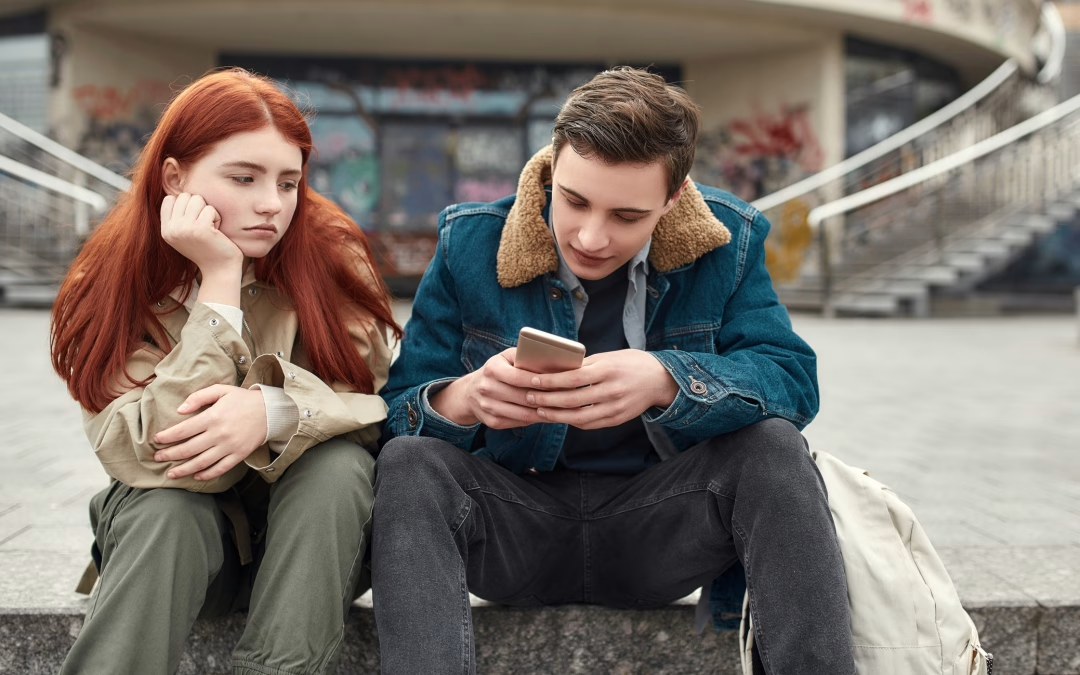
From endless scrolling through breaking headlines to watching live streams of protests and disasters, people today are more digitally connected to global events than ever before. While staying informed can help us feel socially aware, the cost of this constant stimulation is often hidden: rising anxiety, fatigue, and a declining sense of personal agency.
Social media platforms and 24/7 news outlets are designed to capture attention and provoke emotion. Unfortunately, the content that spreads fastest is usually the most emotionally intense. This leaves many of us cycling through outrage, fear, and hopelessness with little time to regulate our nervous systems.
What the Research Says
Scientific studies have confirmed what many people feel: the more we consume distressing news and social media, the worse we tend to feel.
- Increased anxiety and depression: A 2022 study published in Health Communication found that frequent exposure to “crisis news” led to higher levels of anxiety, stress, and poor physical health outcomes.
- Doomscrolling worsens emotional states: Research from the American Psychological Association shows that compulsive scrolling through negative news content is associated with feelings of despair and burnout.
- Social comparison and self-worth: Constant exposure to curated lives online can lead to feelings of inadequacy, especially among teens and young adults. A 2019 study from the University of Pennsylvania demonstrated that reducing social media use to just 30 minutes per day significantly improved mental health outcomes.
- Physiological effects: Prolonged stress from negative media exposure can increase cortisol levels and disrupt sleep, immune function, and emotional regulation.
When Awareness Turns Into Harm
There is nothing wrong with caring about the world. But when your mind becomes saturated with crisis and conflict, it can distort your sense of safety, trigger chronic stress responses, and lead to what psychologists refer to as “learned helplessness.” Over time, this can erode motivation and hope, making you feel numb or powerless.
10 Evidence-Informed Tips to Reduce the Noise and Regain Balance
If you’re struggling with mental exhaustion caused by constant exposure to digital content and news, these practical tips can help you reset and protect your emotional well-being.
- Set time limits for news and social media. Studies show that limiting screen time to 30–60 minutes daily can reduce anxiety and depression. Use screen time tools or app blockers to help.
- Curate your feed intentionally. Follow accounts that uplift or educate without overwhelming. Mute or unfollow pages that provoke chronic outrage or fear.
- Balance your content diet. For every negative headline, consume something neutral or positive. Laughter, inspiration, and creativity are powerful emotional counterweights.
- Schedule unplugged time. Build device-free time into your day. Whether it’s during meals, walks, or bedtime routines, your nervous system needs a break.
- Stick to one or two trusted news sources. Avoid bouncing between multiple sensational headlines. Consuming less news with more intention can lower your emotional overload.
- Take action in your local community. Channeling concern into tangible action can restore agency and counteract feelings of helplessness.
- Protect your rest. Avoid checking the news first thing in the morning or right before sleep. Both your mood and sleep quality will benefit.
- Use mindfulness to stay grounded. Practices like meditation and deep breathing help regulate the stress response and reconnect you to the present moment.
- Talk about what you’re feeling. Therapy or supportive conversations can help process the emotional burden of a constantly connected life.
- Give yourself permission to disconnect. You do not have to absorb everything to be informed or compassionate. Healthy boundaries are essential for mental health.
Final Thought
You are not alone if you feel overwhelmed by the state of the world. While caring is a sign of compassion, too much emotional input without regulation can lead to distress. Protecting your mental health is not selfish—it is essential. Reconnect with the things that give you peace, purpose, and perspective. Then engage with the world from a place of strength, not burnout.
Research and Evidence
- Exposure to crisis news increases emotional distress:
How News Consumption Affects Mental Health: Finding a Balanced Approach - Compulsive doomscrolling and anxiety:
The Dark at the End of the Tunnel: Doomscrolling on Social Media - Limiting social media reduces depression and loneliness:
Social Media Use Increases Depression and Loneliness – Penn Today - Social media overload increases anxiety and diminishes self-efficacy:
Mechanism Study of Social Media Overload on Health Self‑Efficacy - Doomscrolling linked to existential anxiety and pessimism:
Doomscrolling Evokes Existential Anxiety – ScienceDirect
&
Doomscrolling Scale and Personality Traits – NCBI - Doomscrolling disrupts sleep and raises insomnia risk:
Doomscrolling Makes You 12x More Likely to Suffer Mental Health Issues – Daily Telegraph